
9 Ways to Kickstart Your Journey to An Extraordinary Life
What is an extraordinary life? It is hard to define because what may mean an extraordinary life for me, may mean something different for you. I would say that when one feels that life is good and you feel appreciation for what you have and a sense of contentment and fulfillment with life, that is an extraordinary life. Aristotle once said that “Happiness is the meaning and the purpose of life, the whole aim and end of human existence”. This is still relevant today. Some people believe that a amazing life is one in which you have great wealth, a mansion of a home, a Lamborghini or two, and maybe a yacht. You can have all these things and still not have a joyous and happy life life. The simple joys in life are what bring happiness. Here are some ways to help you kickstart your journey to an extraordinary life:
1. Make yourself your number one priority.

We often get lost in the craziness of life and the need to take care of others that we forget to take care of ourselves. In order to do self-care, it is important that you are able to tune into your body. Our bodies talk to us, but we don’t take the time to listen. Maybe that pain in your shoulder or back, or that frequent migraine, is the body’s way of telling you that you need to slow down and pay attention.
Make yourself your number one priority. First, learn how to say no. Sometimes things just aren’t right for us. It’s okay to say no. Don’t let others be in charge of your life. It will be hard at first and others may not take too kindly to this new you, but believe me, you will be much happier and less stressed in the long run. Just remember to be kind when you do.
It is also important to fuel your body and your mind with not only nourishing food, but positive thoughts and positive people. Ditch negative thoughts and negative people. Be around people that make you feel good about yourself. Let those who don’t serve you well go. If this is not possible because they are family members, then just limit your contact with them.
2. Spend as much time as you can in nature.

Your body is affected by your environment and has a huge effect on your immune system, nervous system, and endocrine functions. Nature is one of those environments that contributes overall to your physical and mental well-being. For one, it is an anecdote to stress. It helps lower blood pressure, enhance immune function, lowers stress hormone levels and reduces depression and anxiety. It also improves cognitive function and physical fitness. There is something about using all of our senses in exploring all that nature provides that is so uplifting and calming. Try to get out in nature as often as you can. Nature is full of color, scent, and sound. Listen to the birdsong, smell the jasmine and the pine, look at the colorful leaves. Have you noticed that time slows down when you are walking amongst the trees. Recent studies have shown that just two hours a week in nature is enough to reap its good health benefits.
3. Laugh yourself silly.

Someone once said that a laugh is a loud smile. Have you ever sat next to someone and they were laughing at something that you didn’t think was particularly funny, but now you are laughing just as hard? Laughter is contagious. It is more contagious than a yawn or the common cold. Laughter has numerous psychological and physiological benefits. It reduces stress, increases immunity, relieves pain, promotes relaxation, improves sleep, and aids in blood pressure regulation. Laughter makes us feel happy and lifts our spirits.
Laughter can actually cure what ails us. Laughter therapy, which has sprung up in many medical centers across the country, is now a treatment approach in people with chronic illnesses, including cancer. During these most stressful times, laughter needs to be an important remedy to what ails us. Laughing feels good and can make a huge difference in your emotional, physical, and spiritual well-being. Bring laughter into your life. Watch a funny movie, look at funny photographs, read a funny book, laugh at yourself, or just laugh yourself silly. Laughter truly is the best medicine.
4. Express gratitude for what you already have.

If you are grateful for what you have, you have more to be grateful for. I personally believe this to be true. Feeling gratitude for even the simple things, i.e., the parking space that opened up today, the person who bagged your groceries perfectly, enhances your physical and psychological well-being.
As a gratitude researcher, I conducted a study with very ill cancer patients and had them write in a journal, things they were grateful for. I remember a few of the patients mentioning that they were grateful for their cancer because it brought them closer to their loved-ones. I, as well as other researchers, have found that feeling gratitude for what you already have or also what is yet to come, alleviates depression and improves physical health. A feeling of gratitude also improves sleep, self-esteem, and our relationships with others. Journaling for just 5 minutes a day about what we are grateful for increases our happiness. Rather than make it a rote list, also write why you are grateful for it. As an example, I am grateful for my car because it takes me wherever I need to go. I am grateful for my computer because it allows me to carry out my job functions in an easier way.
One last interesting thing about gratitude is that it decreases self-centeredness and reduces the desire for materialistic things. People who are truly grateful for what they have often are less likely to be desirous of more.
5. Let go of regrets and resentments.
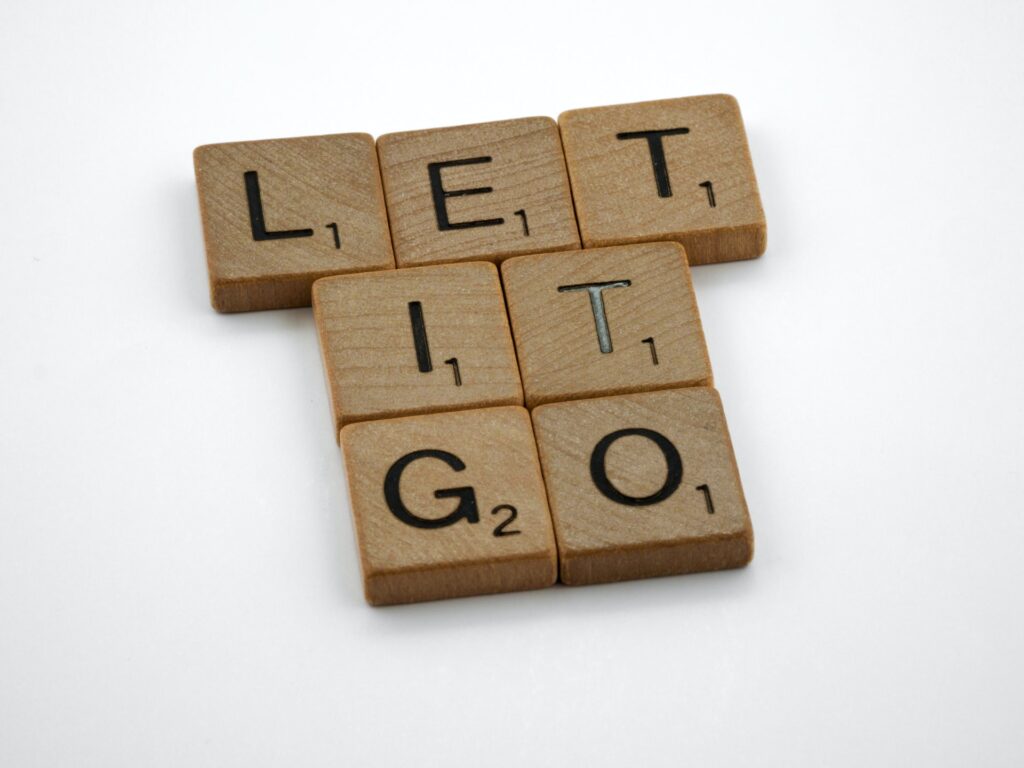
We all have regrets for things we did or didn’t do. These usually revolve around financial decisions, lost relationships, parenting mistakes, or missed educational chances. Studies have shown that people more often regret things they didn’t do versus things that they did do. Holding on to regrets, however, is living in the past. You can’t undo them. So why waste the energy mulling over them? It is often though so difficult to let them go. However, instead of letting them go, what if you could rewrite them. In a journal write how you would have done things differently. See the regret as a learning experience. This tells your subconscious that you have learned from your mistake and will do things differently next time because now you are in a different place and time and now things are different. Then let the regret go.
It is similar for resentments. Have you ever heard the phrase, “resentments are like taking poison and waiting for the other person to die”? It couldn’t be more truthful. Grudges are energy depleters. They can suck the energy right out of you. What happens is that the resentment is held onto so tightly that you can’t let go of it. For some, they hold onto the resentment because they don’t want to let the person go. Holding onto the resentment keeps that person alive in their life, as, miserable as it is. Some people hold onto resentments for an entire life time.
Resentments occur when we feel we have been mistreated in some way and as time passes, you just get angrier and angrier. Forgiveness is the key to letting go of resentment. When you forgive, you are not forgiving the act, but you’re forgiving the person who you felt wronged you.
How do you forgive? The first step is to voice your resentment in a journal. Try to find compassion for the other person’s limitations and inadequacies. Then ask yourself if you could forgive this person. Recognize that people carry a lot of baggage, fears, and inadequacies and are doing the best they can with what limitations they have. Under these circumstances, see if you can find some compassion for them and a willingness to forgive. It will improve your health immensely.
6. Do everything mindfully.


 What does mindfully mean? Have you ever driven somewhere and got to your destination, but don’t recall anything about the journey along the way because your mind was in the clouds. This is an example of mindlessness. Most of us spend our days inside our minds where we are flooded with past memories and fears of the future. When you are living in the past and in the future, you are not enjoying life in the moment. Mindfulness is the opposite. When we are mindful, we are focusing our awareness on the present moment. Eat mindfully, drink a cup of coffee mindfully, wash dishes mindfully, walk out in nature mindfully.
Spiritual leader, Thich Nhat Hanh, once said, “walk as if you are kissing the earth with your feet”. Focus on your surroundings. Listen to the bird calls, the sound of your feet on the ground, the leaves rustling, and the wind blowing through the trees. Smell the flowers and the wet grass after a rain. The health benefits are aplenty when you practice mindfulness. Mindfulness relieves stress, improves sleep, lowers blood pressure, has a positive effect on heart disease, and reduces chronic pain. Try to practice mindfulness daily.
7. Set an intention each morning that it is going to be the best day ever.


Most of us wake up in the morning and hit the snooze button, immediately get on our phone or tablet checking our emails, gulp down some coffee, head out the door, and fight the traffic all the way to work. Already we are primed for stress and a bad day. When you set a great intention for the day and start your day with purpose, it makes for a better day because the intention guides you. It affects how your experience of the day will follow. If I set my intention that I am going to have a great day and stay focused on that intention, when things come my way that may alter that intention, I am more apt to deal with the upset in a calm manner and then move on. Set an intention each morning that today is going to be the best day ever.
8. Be of service to others.

We often experience the most joy when we are of service to others. This can be through volunteering your time in a soup kitchen, walking someone’s dog, running errands for someone. The possibilities are endless. Studies have shown that helping others can actually extend your life. When done often, helping others reduces depression, helps manage stress, helps with chronic pain, and increases life satisfaction. It’s a win win for both parties involved.
9. Form healthy habits.

We are all creatures of habits. In fact, most of our behavior is habitual. We brush our teeth each morning, shower a certain way, down our coffee or tea every morning, and drive the same route to work. You get the idea. Most of us though needs to drop some habits that are not serving us well, such as watching late-night television, smoking, eating fast food every day, overspending, etc. Your habits determine your outcome in life.
Experts say that it takes between 21-28 days to form a new habit. I know this has been the case for me when I am trying to form new habits. Here are some steps you can take to form healthy habits. Make the decision that you are going to change your behavior and form a healthy habit for lasting change. Within that 21 – 28 day timeframe, never allow an exception like I will skip it today and do it tomorrow.
Brian Tracy, self-development guru, says to tell others you are trying to form a new habit. This will give you motivation and discipline to follow through, especially if you know others are watching to see if you have the willpower to do so. Form healthy habits such as exercising regularly, drinking lots of water, and eating nutritious foods. A healthy habit is one which benefits your overall well-being. You feel better and you live longer.
If you enjoyed this article, please feel free to check out the other articles in An Extraordinary Life blog that is on this site. The articles in this blog are not only informative, but are a toolkit for creating an extraordinary life. I also invite you to check out the coaching and mentoring programs on the site. These programs are unique in that we quickly identify the goals you want to achieve, form a plan, and move forward for quick results.